Thursday, October 6, 2011

31 Days: Day 5

Alright, this is impossible. Some how unless my day involves very significant events I lose all ability to remember how I spent my hours by the next morning.

Yesterday... I know I made cranberry oatmeal for breakfast. I went for a long walk with Calvin and Oliver. Somewhere along the line we had tuna wraps for lunch. We checked the mail*. I drove Calvin to work and stopped at the police station for a criminal records check (I am going to be volunteering as a nutrition educator at the YMCA and would also like to start volunteering in my church's nursery). Then I hung out at my friend Megan's place, on Wortley Rd. Her son Kelan is 2 weeks older than Oliver so they became friends.

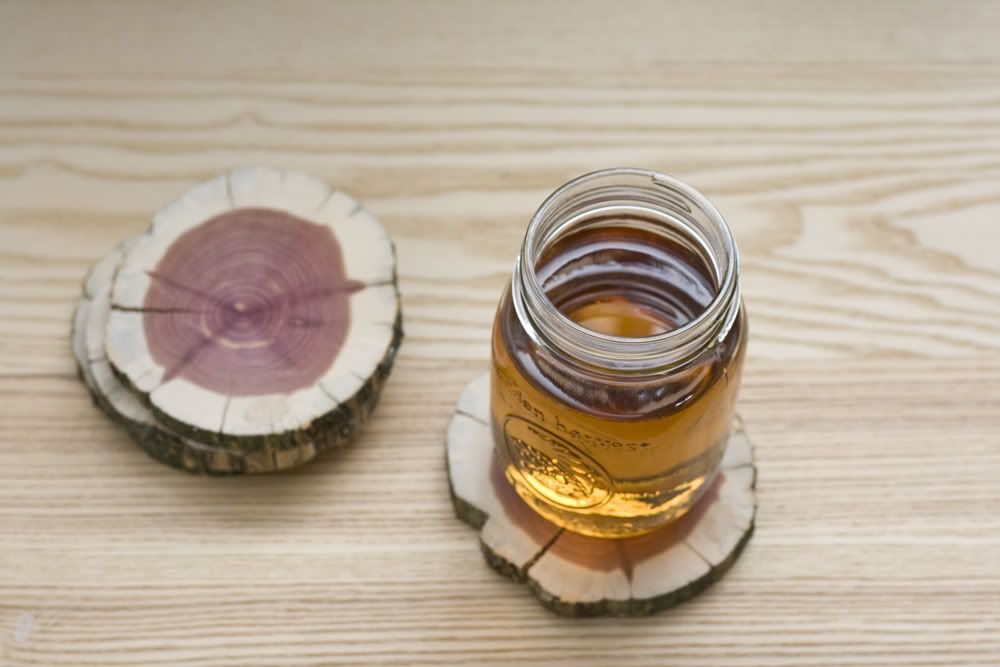
We had chai tea and bonded over countless similar experiences. I'm really glad to have her in my life. We walked down to Quarter Master because I had forgotten a bottle of mint chlorophyll in the staff fridge (Iron Man reminded me of this) and I got to visit with the old staff, plus some customers. Upon leaving to try and find my friend Alla I ran into her son who was also looking for her, and we began a journey of searching for her together. Once we did find her I went to the library (Canadian Living: Create, Update, Remake - DIY Projects for You, Your Family and Your Home) walked back to Megan's to get my car - ran into 3 friends working at burger joint extraordinaire, Relish - and then drove to get Cal. Then we went to East Side Mario's for my friend Ashley's 25th birthday. We chatted about mushrooms and baseball and buying condoms in a wheelchair. We forced Ashley to allow a Happy Birthday singing so that we could eat her cake. And I gave her a homemade present - 2 wood log coasters, tied in a grey yarn bracelet. With a homemade card that used rosemary as a tree in the design. After that we went to Calvin's parents' house to pick up a second hand breast pump that Jeff procured for me. (Was so hoping that his receptionist would blast JEFF YOUR BREAST PUMP IS HERE over the PA system - but no luck). Then I got really tired so we came home. I fell asleep reading "The Thrive Diet".

* In the mail was a free infant formula sample from Similac. Not only do I not know how they got my information, but I don't believe it's right to send unwanted samples to new moms. Dr. Sears says you're much more likely to "give up" breastfeeding if you have formula in the house. Think of the nursing relationships that could be saved if we met challenge with support instead of a way out. I understand that some people need formula and it saves lives, but it needs to be a last resort and not an easy decision. I plan to contact them about my discomfort with the situation and I might even drink the stuff myself since it's probably a decent meal replacement and I'm all for saving money :) What do you think?

Labels: , , , , , , , , , , ,

Tuesday, August 30, 2011

It's Creating Time!

The last days of summer are absolutely made for my favourite things: gardening, canning and crocheting (because you'll need some new scarves, mitts and hats soon!) I could probably include coffee brewin' in there too when the mornings are chilly. Just out of curiosity, does it offend anyone that I drink a mug of coffee every day despite breastfeeding? I would love to know how people feel.

So in honour of this glorious time of year, I have a challenge for my readers. Read through this list of creative ventures and do at least one of them before the autumn equinox on Sept 23rd. Heck, do more than one. I plan to do all of them if my little Ollie Wolfe's sleeping habits will allow.


1. Do some end of summer maintenance to your garden. If you're really ambitious this could include attempting seed saving.
2. Make something DIY instead of buying it. Like these wood coasters (see photo) that my coffee table desperately needs.
3. Learn a new song on your instrument of choice. I suggest Iron & Wine.
4. Crochet a fall scarf. Charcoal grey is particularly satisfying.
5. Host a pickling party. Have friends bring their own jars and pay a buck or two for your supplies (pickling cucumbers, vinegar, salt, maybe sugar and other spices). Or let everyone bring a unque veg to pickle (think asparagus, carrots, pearl onions..)
6. Donate your rarely worn summer clothes. Commit to going new-clothes free all autumn. If you really need something get it second hand.
7. Write a thank you card. Lately I've realized gratitude is one of life's sweetest virtues. Recognize the people in your life that bless you.
8. Brew some joe (or tea!) in a french press. If you're near a specialty coffee shop, a thrift store or an Italian family home, try using a Moka stove top pot.
9. Go on a library binge. It's free!
10. Read myideaofhappiness regularly ;)

Labels: , , , , , , , , , , , ,

Thursday, August 4, 2011

Herbs! How to use 'em!

When  you transition further into natural health you notice (and are overjoyed to find) that there is practically an herb for every ailment. Herbs not only treat a variety of health problems, they are also a great addition to the healthy person's medicine cabinet as they promote general wellness. Most contain large amounts of vitamins and minerals and have been used for generations. Keep in mind that not all herbs are safe in all potencies and preparations. Do your research.

So how do you use herbs? There truly are a long list of ways. And here the list is, for your viewing pleasure:

Water-based herbal preparations (best made with dried herbs)
- Teas or, more accurately if true tea leaves are not being used, tisanes
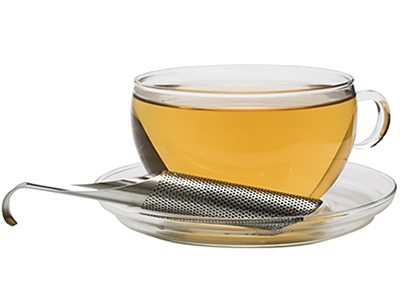
Use about 1 tsp dried herb per cup of boiled water and steep for 20 minutes, then drain and drink. You can drink herbal tea hot or chilled.
- Infusions
This is like a longer-steeped tea. For roots or barks, let 1 oz of your plant soak in a 1-pint jar full of water for 8 hours. For leaves, 1 oz in 1 quart of water for 4 hours. Flowers, the same proportion as leaves but only 2 hours. And seeds, 1 oz in a pint for only 30 minutes. Remember to strain. If you are using a combination (chamomile flowers with ginger root for example) choose the shortest time. You can drink 2 cups a day for a 130 lb person. Increase by a cup/day for every 60 lbs more, or decrease by a cup/day for every 60 lbs less of body weight.
Infusions can also be used for other purposes: baths/soaks, enemas, eye washes or douches.
- Decoctions
Strain your infusion (using the instructions above) and simmer over a stove until it has reduced in volume by 1/2. Take 2 Tablespoons per day instead of 2 cups.
- Syrups
This is the same as an infusion only sugar or honey is added. Use 8 oz sugar or 4 oz honey per 8 oz fluid infusion (pre-reduction). Then boil and if you'd like add 1 oz of brandy, then strain. You can take 1 tsp per day and it should keep for 3 - 6 months.
- Fomentations
This is a piece of cloth that has been soaked in a warm infusion and applied to the body.
- Poultice
This is the actual wet herb that has been strained from any of the above preparation methods. When covered in cloth and applied to the body it is called a compress.

Spirit-based herbal preparations (best made with fresh herbs, or roots/barks)
- Tinctures
This is easily made by filling a jar with any fresh herb, then filling the dead space with pure vodka. Label and let sit for 6 weeks, then strain and use. One dose is 20 drops. Infused vodka is also a delicious treat and a fun, homemade gift. Try peppermint or cinnamon.
- Liniments
A liniment uses the same method but with rubbing alcohol and can only be used externally. (Some people use infused witch hazel, cider vinegar or a carrier oil and still call it a liniment. I'm not sure why.)
- Vinegars
Us the same instructions as making a tincture only with pure, boiling vinegar. A dose is 1 tsp per 100 lb of body weight. For a yummy salad dressing addition try making a rosemary or oregano infused vinegar.

Lastly, oil-based herbal tinctures (must be made with fresh herbs)
- Essential oils
These are not easily made at home but are widely available and can be used for many purposes.
- Infused oils
Fill a jar with fresh, unwashed herbs and fill the dead space with oil. Label and strain after sitting for 6 weeks. Think beyond medicinal use - there are many delicious culinary applications for infused oils. Keep in mind proper canning techniques if you're going to store an oil - if any water remains it will spoil quickly.
- Ointments/Salves/Balms/Butters
Prepare an herb-infused oil then heat 1 oz of it with 1 Tablespoon of hard, grated beeswax. It should cool to an appliable consistency. This is considered a salve. Decrease the amount of beeswax to yield a softer product and it's now an ointment. Add an essential oil to a carrier oil, instead of hand-infusing, and it's a balm. If you use a hard butter (cocoa, etc.) in the recipe it is considered a body butter.
- Lotions
This is the same as any of the above products only with a high content of water which needs to be incorporated using an emsulifying agent. It's usually made this way for convenience in prepared store products, so it's best to just make a salve at home.

Using these methods you can start using herbs at home for a variety of purposes!

Labels: , , , , , , , , , , , , , , , , , ,

Saturday, March 19, 2011

Grow Your Own: Stevia

When I think of the good qualities of a sweetener what comes to mind is: cheap, delicious, natural, low calorie, non-cavity-promoting and, well, sweet. Stevia is all of these things and more. It's a bushy green plant you can grow yourself and when the leaves are dried they are incredibly sweet like sugar. They make a great addition to tea, lemonade, even baking. Everyone should grow it. Here's how.

Obtain stevia seeds - I've seen them at most hardware/camping stores.

Start them indoors if you plan to start your season before frost. If it's already, say, mid-May then you can direct sow. Keep your seeds a good 10 inches apart because it spreads. It can also grow high, over a foot at least, so consider trellising.

Water, but don't over water. Stevia's roots grow shallow so they'll need a shower often but too much water will be worse than not enough. It also doesn't need much nitrogen in the soil so don't grow it around beans or peas, and don't throw old coffee grounds near them, but do add compost to the soil. Compost is a gardener's best friend.

When tiny leaves have formed, hand pick them and keep them in a metal tin to dry. They can then be ground further into a powder and used to sweeten just about anything.

For sweetening 2 Tbsp of ground stevia = 1 cup of sugar but of course if you're baking your wet/dry ingredient ratio will have to be played with a little, as with your oven's temperature.
In an old family-sized pickle jar add 2 teabags, a few lemons, sliced, and a dash of stevia leaves. Fill with water to the top and leave in the sun. Nothing is better.

Labels: , , , , , , , , , ,

Tuesday, July 20, 2010

Incredible Edibles: Tasty Forest Treats

I am writing this from a family cottage less than an hour north of Huntsville, Ontario. The combination of being in the back woods and having four days off work has my inner plant-hunter revved up and ready to gather.  The Muskokas boast beautiful tree cover, untouched lakes at every turn and a diverse forest floor made of soil and clay, covered in pine needles atop Canadian rock shield, making it the perfect home to many wild edibles and drinkables.

Plant-hunting can be as dangerous as it is rewarding. It is important to properly identify anything you intend on ingesting. This is where an edibles-walk with a professional herbalist may come in handy, especially in the case of mushrooms which can be deadly if poisonous. If a professional is not available there are always locale-specific books available at your library. In a survival situation, when starvation is a greater threat than a mild rash, you can test the safety of any plant by rubbing a tea made of its leaves on the outside of your lip. If no reaction occurs perform the same test with the dried leaves of the plant. If there is still no reaction, this indicates that it may be safe to eat, but begin in small doses.

Plants may be used in many forms. Some produce delicious fruits such as wild raspberries and Saskatoon berries. The leaves of a sumac plant are poisonous, but its berries can be steeped to make a beverage similar to pink lemonade when sweetened. Berries are naturally high in fiber, B vitamins and minerals.
Some wild plants will grow long leaves that can be incorporated into salads. Dandelion greens are slightly bitter but are highly diuretic and supportive to kidney and liver health. Its tea is a suitable substitute for coffee. Yellow oxalis or wood sorrel will give your salad a lemony punch but is quite acidic so less is more. The plant is hardy so harvest away.

The roots and young shoots of cattail are completely edible and make great roof thatching in a survival situation. White trout lilies flower in spring and stand about half a foot high. The tubers can be eaten only when raw. Milkweed was never a hit when I was a young forest wanderer, but culinary experts say it tastes great when battered and deep-fried. Of course if you can perform the easy task of identifying a sugar maple tree, its sap can be boiled down to 1/40th the volume to yield a sweet and uniquely Canadian syrup.

My personal favourite use for wild plants is herbal tea. Use one teaspoon of a dried leaf or two Tablespoons of the fresh leaf for each cup of water. Pour the boiled water over the leaves in a non-metal container and replace the lid. Steep for ten minutes. If tea is ever too bitter add a splash of lemon or a touch of honey, or re-brew using a steeping time of only three minutes. Some fantastic teas include:

Balsam fir and other pines: these produce needles that make a delicious tea. Do not place the needles in boiling water, rather water just off the boil, as bitter compounds will be extracting making the tea unpleasant. The balsam looks very similar to a hemlock which isn’t a problem because hemlock makes an equally tasty brew.

Burdock: The root of this plant can be made into a detoxification elixir. It is one of the herbs used in the Essiac and Floressence cleansing tonics made famous when a Canadian nurse was shown their cancer fighting abilities by an Aboriginal tribe.

St. John’s Wort: Easily identified by its characteristic yellow flowers, it is an effective treatment for depression and anxiety. If enough is harvested it will make a pleasant juice.

Sweet gale: The leaves of this Central Ontario native can be made in a dream-inducing tea. It grows at the water’s edge and can be picked in July and early August. The shrubs grow up to six feet tall and have a wonderful scent, often used as a bug repellant. I am off in search of this gem this morning.

Other plants that have pleased me with their tea-making qualities include anise, chamomile and all varieties of mint, with wintergreen being the greatest.

Please note that you, and only you, are responsible for being sure which plants, and what preparation methods, are safe.

Labels: , , , , , , ,